


Every run of brickwork on a new build has movement joints in it, and every one of them ends up with a bead of sealant on the face. It’s a small job compared with the rest of the build, but it’s one of the first things a buyer, a warranty inspector or a site manager on a snagging walk will spot if it’s done badly.
We’re Pioneer Sealants Ltd, Bedford-based specialist sealant applicators with over 20 years in construction behind the company. We seal brick movement joints for housebuilders, developers and main contractors across Bedfordshire, London, the South East, the Midlands and East Anglia. This guide covers what the joint is for, what should be behind the sealant, how to pick and colour-match the mastic, and the faults we see most often.
What a brick movement joint is for
Brickwork doesn’t stay still. Clay bricks expand slowly over their life, blockwork and concrete shrink, and the whole wall moves with heat, cold and moisture. If that movement has nowhere to go, it shows up as cracks, often stepped cracks through the mortar or cracks at corners and openings.
A movement joint is a planned break in the brickwork, usually vertical, that lets each panel move without cracking. The position and spacing are set by the designer or engineer and shown on the drawings. Our job comes at the end: closing the face of the joint with a flexible sealant that keeps the weather out and still lets the wall move.
What should be behind the sealant
The sealant is only the last 10 to 15 millimetres or so of the joint. What’s behind it matters just as much:
- A compressible filler. The joint should be filled with a soft, compressible filler board, not mortar, timber or offcuts of hard insulation. If the filler can’t squash, the joint can’t close and the brickwork will crack anyway.
- A clean, open joint. Mortar snots and bridges across the joint are one of the most common problems we find. Any mortar bridging the gap locks the two panels together and makes the joint pointless.
- A backer rod. A closed-cell backer rod pressed in at the right depth gives the sealant a firm back to tool against and sets the depth of the bead.
- No bond to the back. The sealant should stick to the two brick faces only. If it also sticks to the filler behind (three-sided adhesion), it tears when the joint moves. The backer rod or a bond breaker tape stops that happening.
If we arrive and find mortar in the joint or the wrong filler, we’ll flag it to the site manager with photos before we seal, rather than hiding it under a nice-looking bead.
Choosing the right movement joint sealant
For brick movement joints you want a low-modulus sealant. In plain terms, that means it stretches and squashes easily without pulling hard on the edges of the brick, which matters because the face of a brick can be softer than the sealant.
Depending on the specification, that’s usually a low-modulus silicone, a polyurethane or a modified polymer (hybrid) sealant. We use and apply products from brands including Arbo, Sika, Dow (DOWSIL), Tremco CPG and Soudal, and we always follow the manufacturer’s instructions on primer, joint width to depth and curing. Porous or dusty brick faces often need a primer, and skipping it is a common reason beads peel away within a year or two.
Colour matching the mastic to the brick

On a housing site, colour is what people notice. A bright white or mid-grey bead running up a red brick elevation looks like a mistake from across the street.
Most manufacturers offer a range of brick-tone colours, from brick red and terracotta to buff, sandstone, brown and dark grey. We match the sealant to the brick and mortar on that plot, and where the elevations change brick type we change colour with it. We’re happy to put a sample bead in for the site manager to sign off before we do the whole plot. You can read more on our expansion joint sealing page.
Faults that fail a snagging inspection
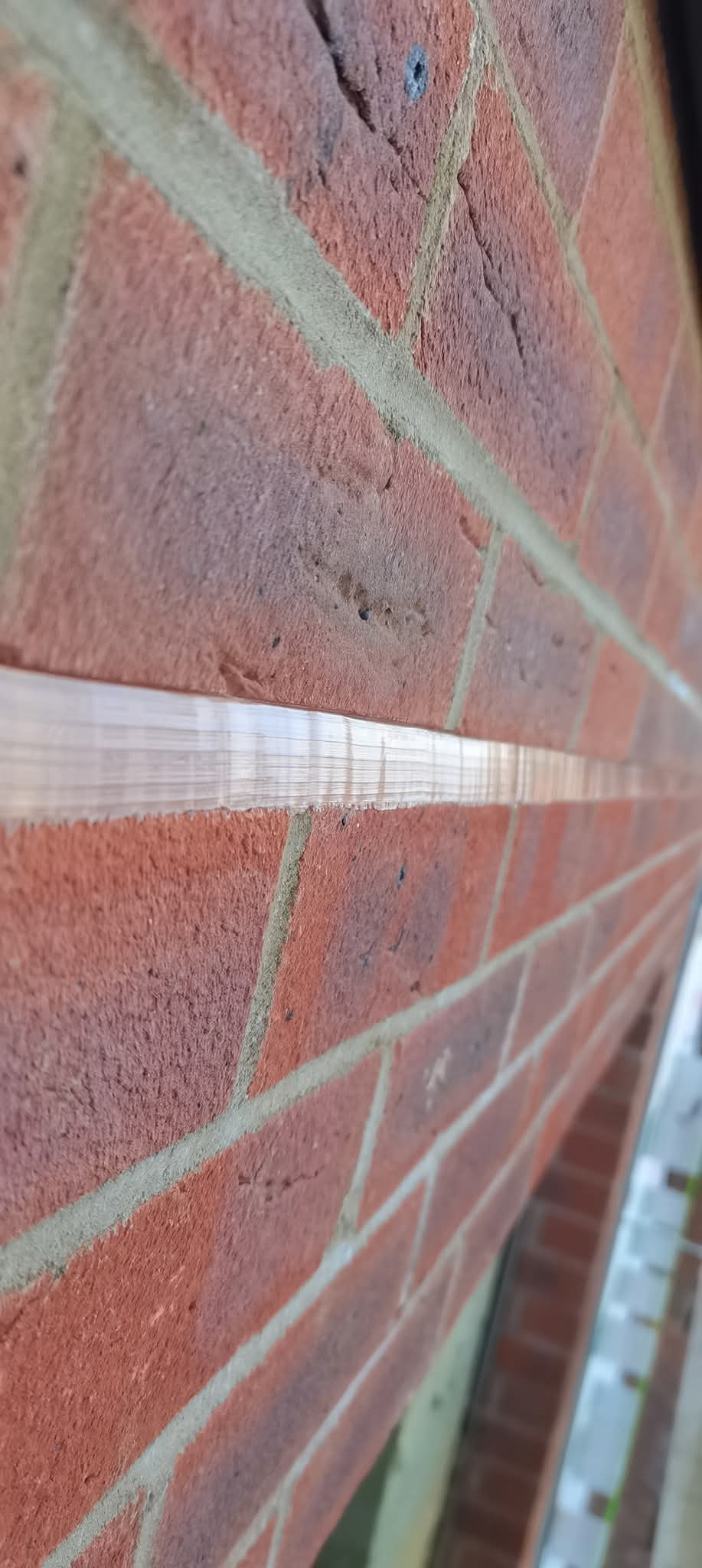
These are the brick movement joint problems we’re most often asked to put right:
- Sealant that’s too thin. A skim of mastic over a deep gap splits as soon as the joint opens.
- Mortar bridging behind the bead. The bead looks fine, but the wall cracks next to it.
- Wrong colour, or mixed colours on one elevation. Usually because different gangs used whatever cartridge was in the van.
- Messy edges. Smears on the brick face are hard to clean off textured brick, so we mask where needed and tool the bead neatly.
- Sealant painted over or used as a filler. Movement joint sealant needs to stay flexible and visible, not hidden under paint or render.
How we work on housing and commercial sites
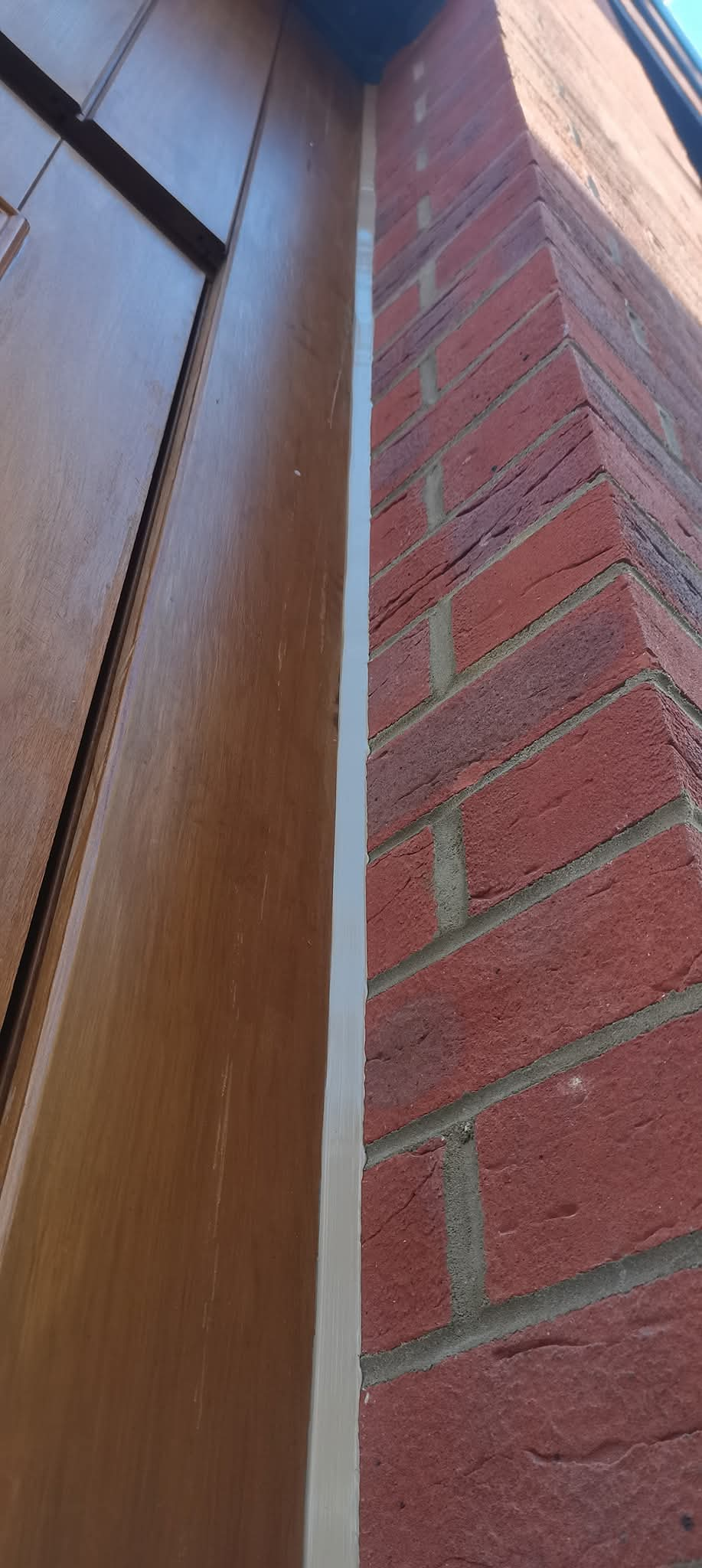
We seal movement joints plot by plot, block by block, or as one package across a whole development, working around your build programme. We work to the site’s RAMS, permits and inductions, we’re IPAF trained for work at height, and we carry £10m employer’s liability and £5m public liability insurance. We’ve worked for housebuilders and contractors including Vistry and Berkeley. For whole-plot sealing on new homes, including windows, doors and internal mastic, see our new-build plot sealant page. For bigger joints in concrete frames and car parks, see structural movement joint sealing.
Brick movement joint FAQ
Can I use ordinary silicone in a brick movement joint?
Use a low-modulus sealant that’s suitable for masonry movement joints. A general-purpose or high-modulus silicone can pull at the brick edges and may not suit the movement the joint is designed for.
Should there be mortar in a movement joint?
No. The joint should be clear of mortar and filled with a compressible filler, with a backer rod and sealant on the face.
Do you reseal failed movement joints on finished buildings?
Yes. We cut out the old sealant, clean and prime the joint, fit new backer rod and reseal.
Do you cover London?
Yes, regularly, along with Bedfordshire, the South East, the Midlands and East Anglia.
Need brick movement joints sealed?
Send us the drawings or plot list, a few photos and the site location, and we’ll come back with a clear quote. Call 01234 607 252, WhatsApp 07757 772 880, email office@pioneersealants.co.uk or use our contact page. We’re open Monday to Friday 8:00 to 18:30 and Saturday 9:00 to 16:00.
Insured & pre-qualified
For homeowners, builders and main contractors.
- £10m Employer’s LiabilityInsurance cover
- £5m Public Liability & Professional IndemnityInsurance cover
- Constructionline Silver member

- NVQ Level 2Sealant Applicator
Over 20 years in construction
Products we use
Sealants and adhesives we use on site.








Brand names and logos are trademarks of their respective owners and are shown to identify products we use. No endorsement is implied.
Got a joint that needs doing properly?
Call us, or send a few photos on WhatsApp for the quickest quote.
- Opening hours
- Monday – Friday8:00am – 6:30pm
- Saturday9:00am – 4:00pm
- SundayClosed