

On a commercial façade, the sealant joints are a small line on the drawings and a big problem when they fail. Water tracks into the cladding, stone stains, window perimeters leak and the snag list grows. Getting façade joint sealing right the first time is cheaper than cutting it all out six months later.
We're Pioneer Sealants Ltd, Bedford-based specialist sealant applicators with over 20 years in construction behind the company. We seal façades, cladding and window perimeters for main contractors across Bedfordshire, Northamptonshire, London and nearby counties, and further afield on larger commercial jobs. Here's what the work covers and how to run it on site.
What counts as façade joint sealing
Façade joint sealing is the flexible sealant work that keeps weather out of the building envelope. It usually includes:
- Cladding panel joints, vertical and horizontal, in metal, timber-effect, render or stone-effect boards
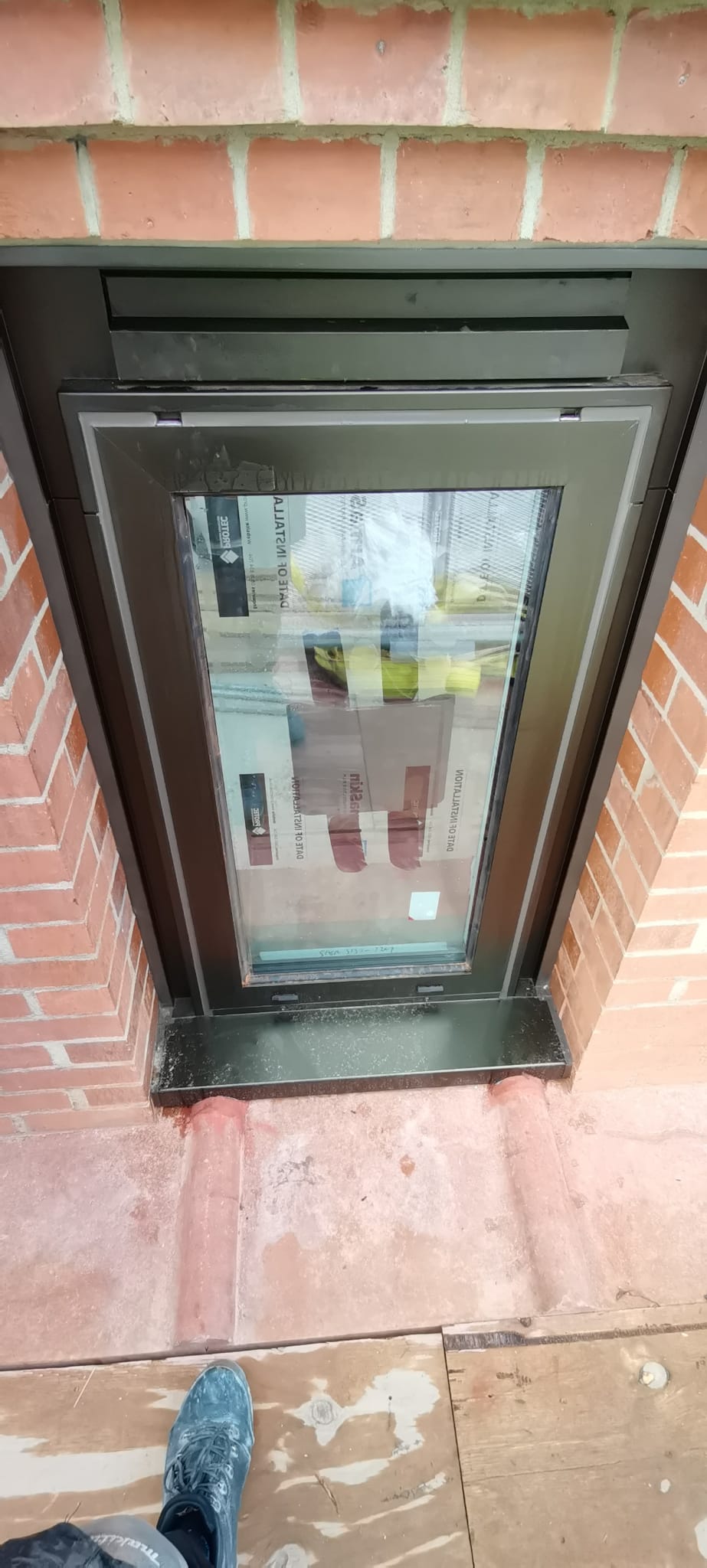
- Window and door frame perimeters, where the frame meets brick, stone, concrete or cladding
- Coping, sill and flashing junctions, where water would otherwise sit or track in
- Movement joints in the façade and brickwork, so the elevation can expand and contract without cracking the seal
- Curtain-wall and glazing joints, where specified as sealant rather than gasket-only detailing
It's related to, but not the same as, a full curtain-wall package. Failure signs on an existing curtain wall are covered in curtain wall sealant failure. For the sealing package on a live build, see our façade and curtain wall sealant page.
Why the product choice matters on stone and cladding
Not every silicone is safe next to pale stone or porous cladding. Some products leach plasticisers and leave a sticky or stained edge that never cleans back. On stone façades we use a non-staining silicone suitable for that substrate; on the new City of London law courts at Salisbury Square we've been sealing external window frame perimeters between the stone façade and the frames with Arbo Arbosil XL1099, which is the non-staining grade specified for that kind of work.
Elsewhere we use and apply Arbo, Sika, Dow, Tremco CPG, Bostik and the other brands on our charts, always as independent applicators. Polyurethane and polysulphide sit alongside silicone where movement or substrate calls for them. The right product matches the substrate, joint movement and colour schedule — not whichever cartridge is in the van.
What a proper façade joint looks like
From the scaffold or MEWP, a finished joint should:
- Bond to both sides, with no gaps, pinholes or pulls along the edge
- Sit on a backing rod (or bond-breaker tape) so the sealant only sticks to the two faces, not the back of the joint
- Match the specified width and depth, usually roughly 2:1 width to depth for a movement joint, unless the manufacturer says otherwise
- Be tooled smooth and consistent, in the colour agreed on the sample board
- Leave adjacent stone, glass and cladding clean, with no smears or overspill
If the old sealant is still in the joint, it has to come out. Over-sealing on top of failed material is how you get callbacks.
How we run the work on a live site
Façade sealing sits late in the programme, when cladding, windows and flashings are going in and access is busy. A few things that keep it moving:
- Agree the colour board and product early, before the elevation is closed up
- Leave us a clear lift: scaffold lifts or MEWP slots booked, not shared with wet trades on the same face
- Give us clean, dry joints. Dust, release agents and wet stone kill adhesion
- Share the elevation drawings and joint schedule, so widths and movement joints aren't guessed on the day
- Ask for RAMS up front. We provide risk assessments and method statements on request, and we carry £5m public liability and £10m employer's liability. IPAF 3a/3b cover is held for boom and scissor work where the site needs it
We've sealed commercial packages in London and nearby counties, including City of London window-to-stone work at Salisbury Square. For how we work with main contractors, see our commercial mastic contractor page, and for London coverage start with mastic man City of London.
Brick movement joints on housebuilder elevations are a close cousin; see brick movement joint sealant. Vertical movement joints more generally sit on our expansion joint sealing page.

Common snags we get asked to sort
Most façade callbacks we see come from the same handful of issues:
- Wrong product on stone, leaving staining at the joint edge
- Three-sided adhesion, where no backing rod was used and the joint tears as soon as the façade moves
- Joints sealed too early, before cladding had finished moving or before flashings were in
- Mixed colours on one elevation, because the sample board wasn't locked
- DIY touch-ups by other trades over dirty or wet substrate
None of those are hard to avoid if sealing is treated as a trade in its own right, not a Friday afternoon add-on.
FAQ
Is façade joint sealing the same as curtain-wall sealing?
Not always. Curtain-wall systems often rely on gaskets and structural silicone in the factory or on specialised glazing crews. Façade joint sealing is the site-applied weatherseal at cladding joints, window perimeters, copings and movement joints. Some jobs need both.
Can you match existing sealant colours on a refurb?
Usually yes, from a colour chart or a sample. We'll confirm against the elevation before we start a full lift.
Do you work out of hours in central London?
Yes, where the site allows. Occupied offices and City sites often need evening or weekend shifts, and we plan around that.
Do you only cover Bedfordshire?
No. We're Bedford-based and cover Bedfordshire, Northamptonshire, London and roughly 50 miles around Bedford, with nationwide travel for larger commercial packages.
Get a façade sealing package quoted
If you're pricing or programming façade joint sealing on a new build or a refurb, send the elevation drawings, joint schedule and a couple of photos of the access. We'll tell you straight what the package involves.
Call 01234 607 252 or WhatsApp 07757 772 880, or use our contact page.
Mastic and sealant work in London: we cover every London borough. See Mastic Man London or go straight to your area: North London · North-East London · East London · South-East London · South-West London · West London · Westminster & the City.
Insured & pre-qualified
For homeowners, builders and main contractors.
- £10m Employer’s LiabilityInsurance cover
- £5m Public Liability & Professional IndemnityInsurance cover
- Constructionline Silver member

- NVQ Level 2Sealant Applicator
Over 20 years in construction
Products we use
Sealants and adhesives we use on site.








Brand names and logos are trademarks of their respective owners and are shown to identify products we use. No endorsement is implied.
Got a joint that needs doing properly?
Call us, or send a few photos on WhatsApp for the quickest quote.
- Opening hours
- Monday – Friday8:00am – 6:30pm
- Saturday9:00am – 4:00pm
- SundayClosed