

Expansion Joint and Movement Joint Sealing Contractors for Brick, Block and Concrete
Every building moves with heat, cold, moisture and load. As expansion joint sealing contractors, our team makes sure the sealant in each joint can move with it, so water stays out and the structure is left free to work.
What happens when a movement joint stops moving
Movement joints are deliberate breaks in brickwork, blockwork and concrete that let the building expand and contract. The expansion joint sealant sitting in the gap has one job: stretch and compress without tearing or letting go. When it hardens, splits or peels away from one face, water ingress follows, and with it damp, frost damage, staining and spalled edges.
Most failures we are asked to fix come down to the original installation rather than the product. Joints sealed too shallow, too thin, onto dusty faces or without a backer rod rarely last. Three-sided adhesion is the classic fault: the sealant is stuck to the back of the joint as well as the sides, so it cannot stretch and tears at the first big movement.
The expansion joints and movement joints we seal
Our expansion joint sealing covers new work and remedial resealing on commercial, industrial and residential buildings.
Brickwork and blockwork
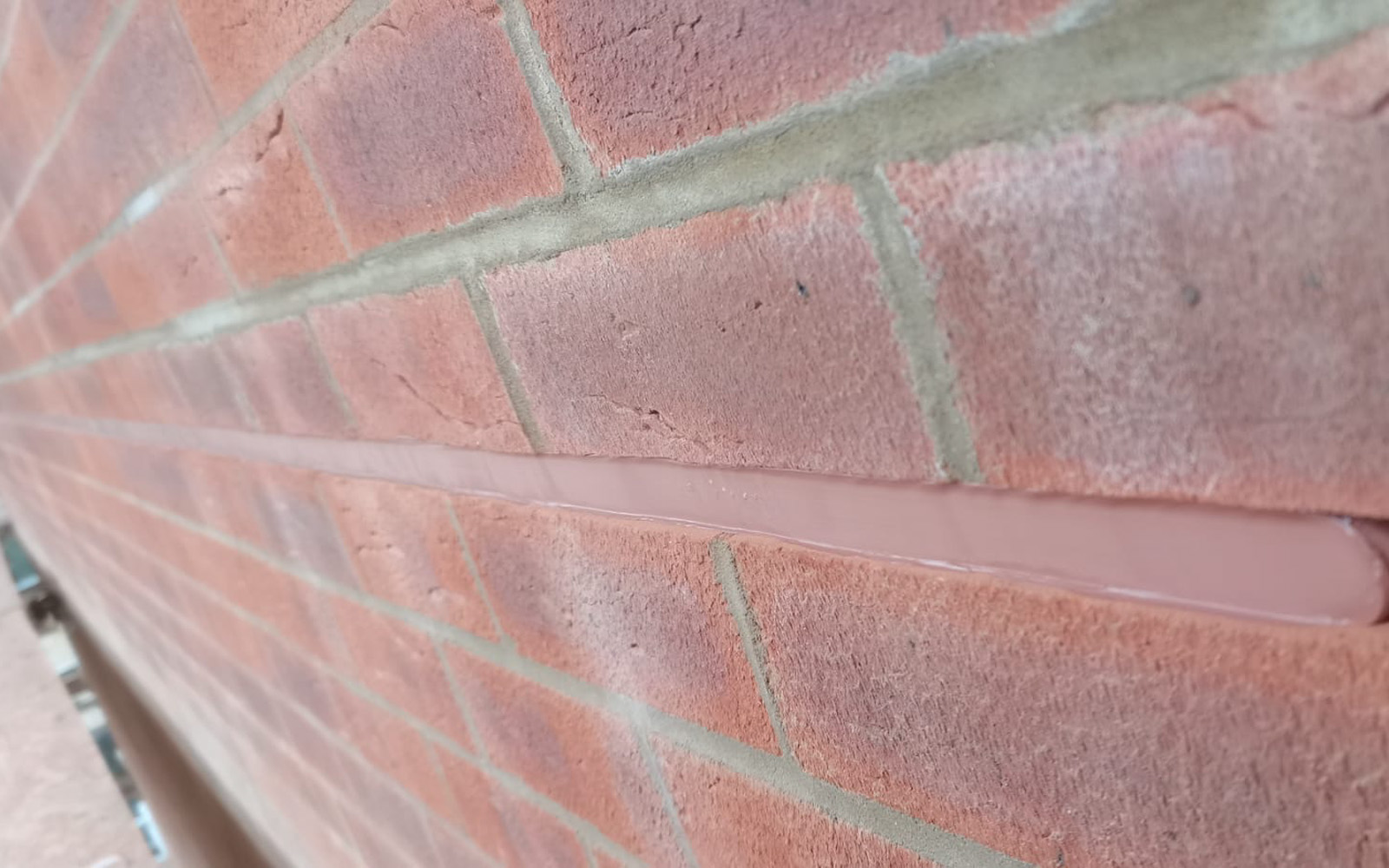
Brick movement joint sealant in vertical and horizontal joints, colour-matched sealant chosen to sit quietly against the brick or mortar.
Precast concrete
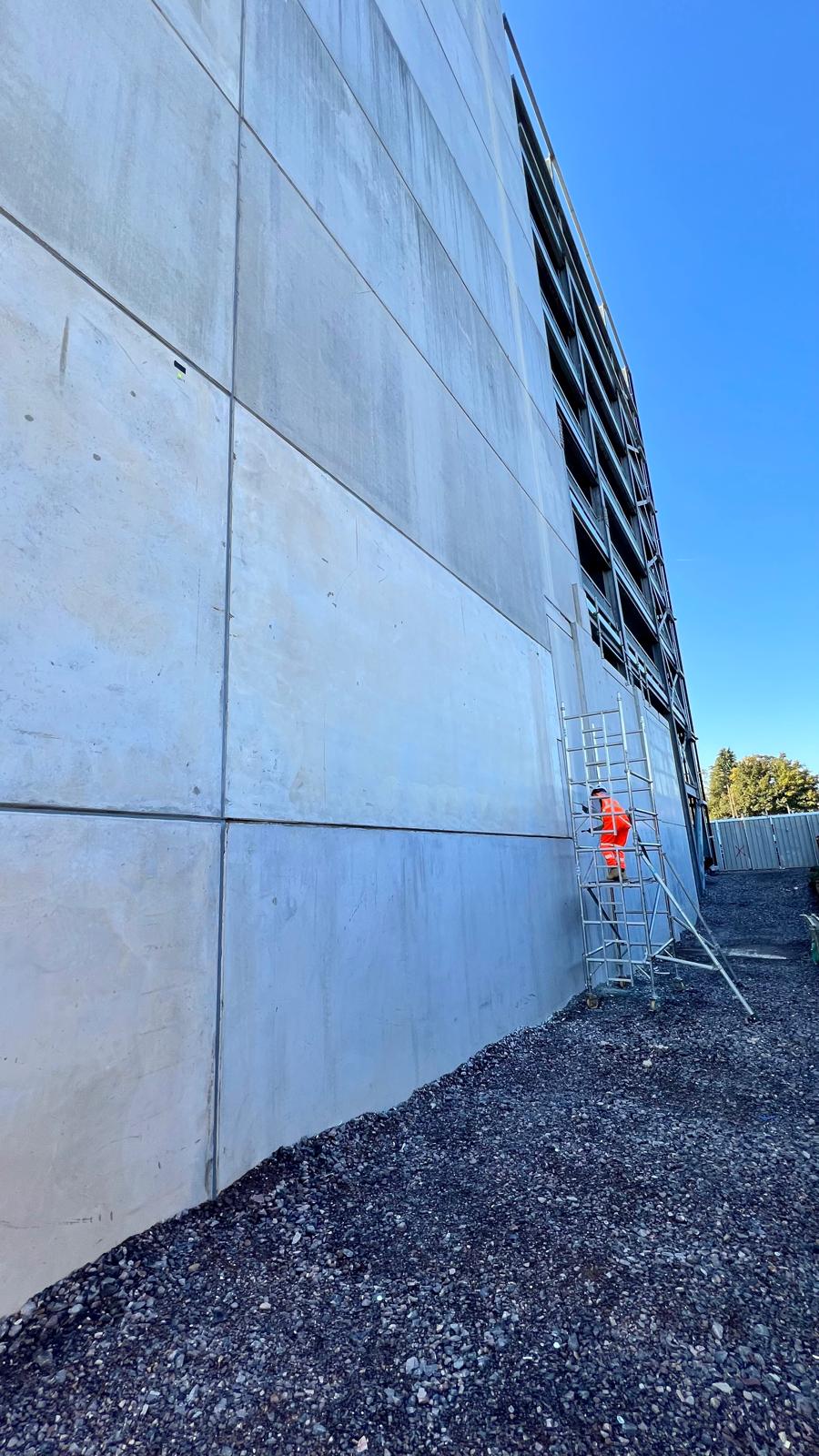
Panel, core and stair joints. Our precast concrete joint sealing page has more detail.
Concrete expansion joints
Concrete expansion joints in slabs, ramps and hardstandings, plus industrial floor expansion joints in warehouses and factories.
Cladding joints
Cladding joints between panels, stone and render, sealed so the façade stays weathertight as it moves.
Copings and parapets
Joints under copings, around flashings and at parapets, where water is most likely to find a way in.
Remedial resealing
Resealing movement joints that have failed: cutting out old mastic, cleaning back to sound material and starting again properly.
How our team carries out movement joint sealing
Whether it is a single joint or a full elevation, the process is the same.
Cut out
Failed sealant and old backing removed in full, without damaging the arrises either side.
Clean and prime
Joint faces brushed and cleaned back to sound material; primer applied where the manufacturer calls for it.
Back the joint
Closed-cell backer rod or bond breaker set at the correct depth, so the sealant bonds to two sides only.
Seal and tool
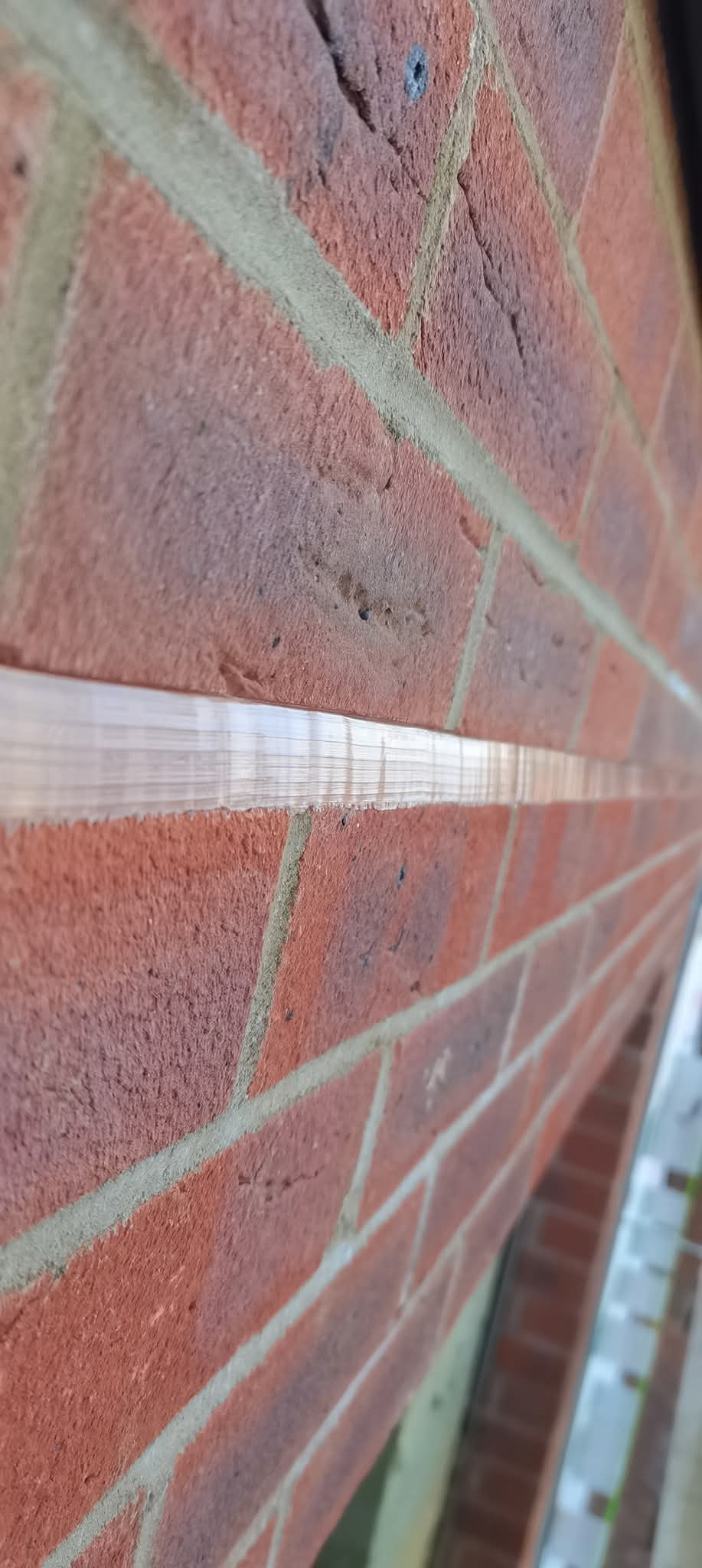
Sealant gunned in, tooled to a smooth concave profile, masking lifted and the line checked.
Joint width, depth and movement
Every sealant has a published movement capability and a recommended width-to-depth ratio. We check both before quoting, along with the substrates, the exposure and whether the joint is trafficked. A joint that ignores the numbers might look tidy on day one but will not last.
For most external brick and façade joints a low modulus sealant is the right starting point, because it stretches easily and puts little stress on the joint faces. For trafficked concrete, a tougher polyurethane joint sealant or modified polymer sealant usually performs better.
Sealant types we use for expansion joints
We apply polyurethane, polysulphide, silicone and modified polymer sealants. Each suits different joints: silicone sealant for glazing interfaces and some façades, polyurethane and polysulphide sealant where joints see traffic, fuel or abrasion, and modified polymer where paintability or a broad range of substrates matters.
We use and apply Arbo, Sika, Tremco, Dow and Soudal products, and we follow the specification wherever there is one. Arbo One LM is a product our team uses often on brick movement joints.
Joints at height and across large sites
Plenty of movement joints sit high on an elevation. Our director holds IPAF 3a/3b cards, so our team can work safely from a MEWP, boom lift, tower or scaffold. On larger jobs we work to your programme and can phase the work so other trades are not held up.
Insured & pre-qualified
For homeowners, builders and main contractors.
- £10m Employer’s LiabilityInsurance cover
- £5m Public Liability & Professional IndemnityInsurance cover
- Constructionline Silver member

- NVQ Level 2Sealant Applicator
Over 20 years in construction
Products we use
Sealants and adhesives we use on site.








Brand names and logos are trademarks of their respective owners and are shown to identify products we use. No endorsement is implied.
Expansion joints and movement joints: what is the difference?
People use the two names for the same thing, and on most buildings they are the same joint. A movement joint is any planned gap that lets a building expand, contract, settle or flex without cracking. An expansion joint is a type of movement joint designed mainly for thermal and moisture expansion, for example the vertical joints in a long run of brickwork or between concrete bays.
Brickwork and blockwork movement joints, joints between precast panels, perimeter joints where cladding meets the frame and joints between slabs all need the same thing: a sealant with enough movement capability, the right width-to-depth ratio, a closed-cell backing rod and clean, sound joint faces. That is why this page is our main page for both expansion joint sealing and movement joint sealant.
For movement joints inside a concrete frame, such as slab edges, precast to in-situ junctions and soffits, see structural movement joints. For floors see slab joint sealing, and for external yards and car parks see concrete joint sealing.
Our work, reviews and related services
Rated 5.0 from 15 Google reviews. Homeowners, landlords and contractors review our sealant work on Google, and we are always happy to share photos of similar jobs before you book.
Related services: structural movement joint sealing, precast concrete joint sealing, concrete joint sealing, slab and floor joint sealing, façade and curtain wall sealing.
Movement joints we’ve sealed


Expansion joints: common questions
What is the difference between an expansion joint and a movement joint?
A movement joint is any planned gap that lets a building move without cracking. An expansion joint is a type of movement joint designed mainly for thermal and moisture expansion. Both are sealed the same way: clean faces, a backing rod at the right depth and a sealant with enough movement capability.
How often do expansion joints need resealing?
There is no fixed interval. It depends on the product, the exposure and how much the joint moves. Inspect them every year or two; split, hardened or debonded sealant means it is time for resealing.
Can you colour-match movement joint sealant to existing brickwork?
Usually, yes. We choose the closest shade from the manufacturer’s range or use the colour named in your specification.
Do you seal industrial floor expansion joints?
Yes. We seal expansion and isolation joints in warehouse and factory floors, and can phase the work so the floor stays in use. See our slab joint sealing page for more.
Where do your expansion joint sealing contractors work?
Our team covers London, the South East, the Midlands, the East of England and the South, on commercial, industrial and residential projects.
Joints cracking or letting water in?
Send photos, a joint schedule or drawings to office@pioneersealants.co.uk, call 01234 607 252 or message us on WhatsApp, and our team will advise on the right fix.
- Opening hours
- Monday – Friday8:00am – 6:30pm
- Saturday9:00am – 4:00pm
- SundayClosed