


Structural Joints Mastic: Sealing Movement Joints in Concrete Structures
Large concrete structures are built with joints that let whole sections move independently. Our team provides structural joints mastic for those joints, sealing them so the frame can move while water and debris stay out.
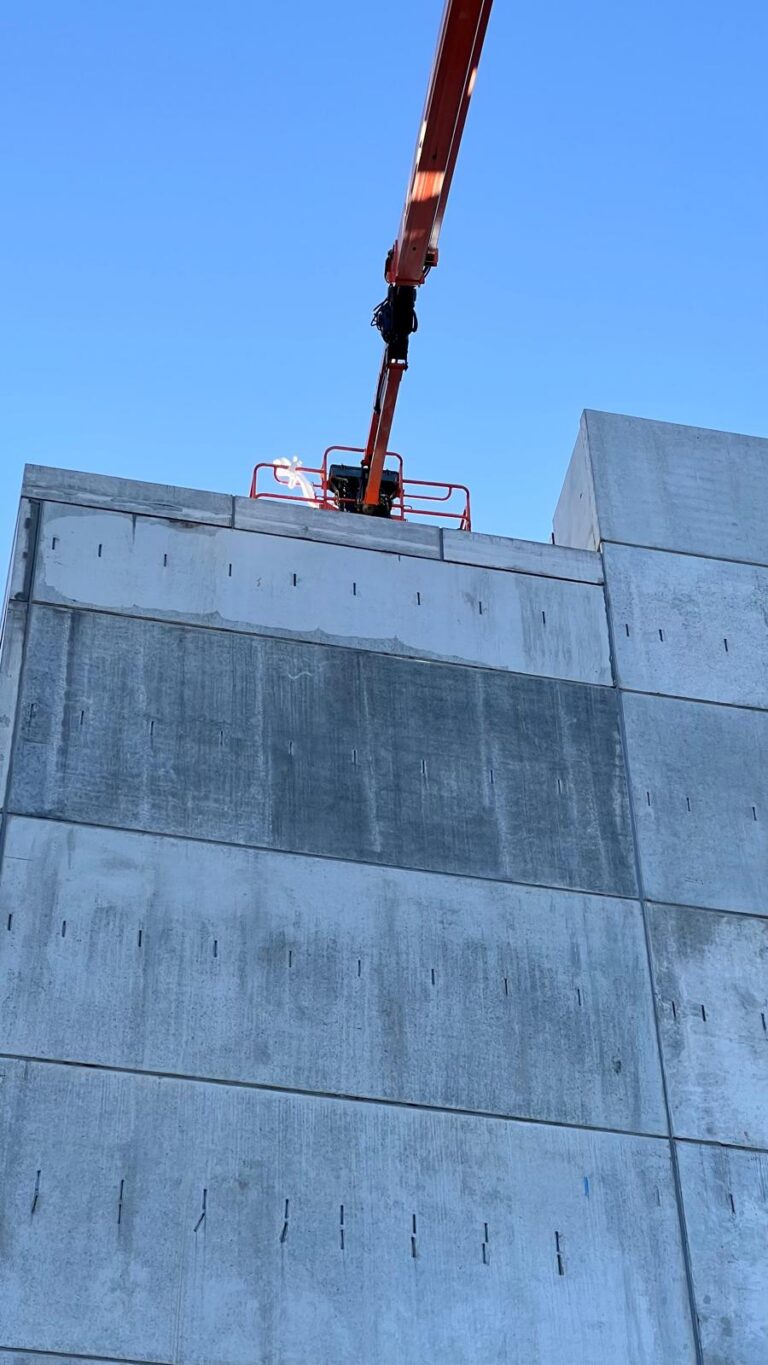
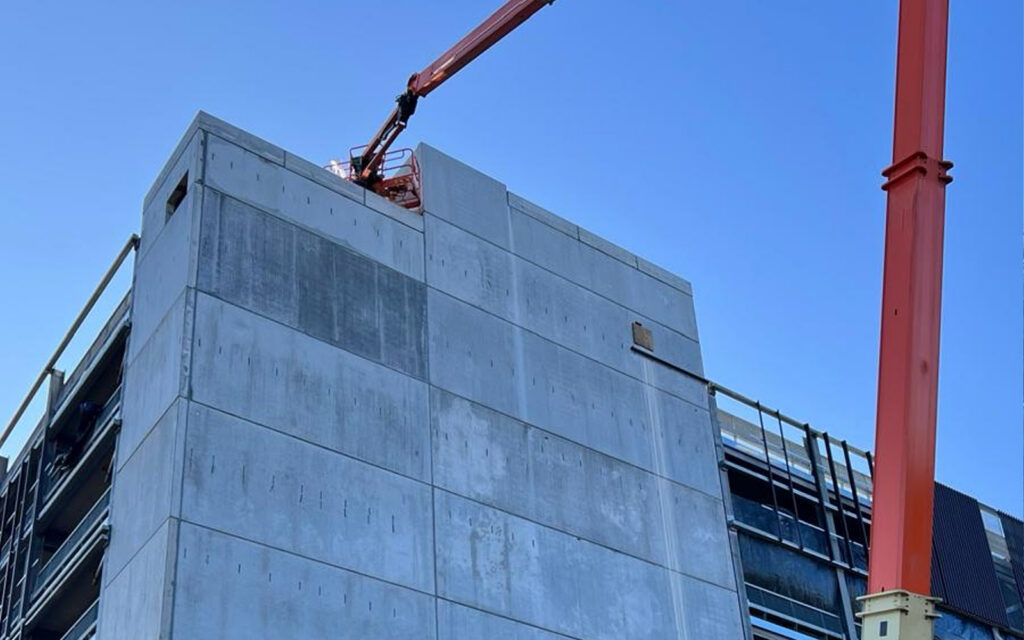
Photo: sealing precast wall joints at Guildford train station multi-storey car park.
What we mean by structural joints
Structural movement joints are the planned breaks an engineer designs into a concrete frame: between blocks of a building, between a frame and its cores, or between new and existing structures. They are usually wider and see more movement than everyday brickwork joints, so the sealant and the backing have to be chosen with care.
To be clear about scope: this page covers structural movement joint sealing with elastic sealants. It is not structural glazing, structural repair or mechanical expansion joint systems; those are designed and installed by other specialists, and we are happy to work alongside them.

Structural movement joints we seal
Typical joints on our structural work:
Frame and slab isolation joints
Joints separating a concrete frame from slabs, cores and adjoining structures.
Joints between structures
Movement joints in concrete frames where new buildings meet existing ones.
Precast to in-situ joints
Junctions where precast panels, stairs or beams meet cast concrete.
Walls and soffits
Vertical wall joints and overhead soffit joints, sealed from MEWPs or towers.
Car park structures and deck edges
Car park structures move a lot because they are exposed to sun, frost and traffic. We seal wall, upstand and soffit movement joints on car park structures, and we discuss car park deck joints case by case, since trafficked deck joints often need a specific engineered system.
Our Guildford train station multi-storey car park package, carried out between September and November 2024, is a good example of this kind of work: roughly 1,250 metres of joints on the walls of a large concrete structure, sealed with a one-part modified polymer sealant over bond breaker tape.
Sealing structural joints at height
Most structural joints sit well above ground. Our director holds IPAF 3a/3b, PASMA, CSCS and SSSTS cards, and our team works from boom lifts, cherry pickers, scaffold towers and crane-suspended baskets. We plan access with your site team, and RAMS are provided on request. We have had no RIDDOR incidents in 3 years.
Preparing a structural joint properly
Wide, high-movement joints leave little margin for error.
Survey
Joint widths, depths and movement checked against drawings and the sealant’s movement capability.
Prepare
Old material removed, faces ground or brushed clean and primed where required.
Back
Backer rod or bond breaker tape to the right depth so the sealant can stretch freely.
Seal
Low-modulus or modified polymer sealant applied and tooled to a consistent profile.
Sealants for structural movement
For high-movement concrete joints we use low-modulus silicone, polyurethane, polysulphide and modified polymer sealants, matched to movement, exposure and colour. We use and apply Arbo, Sika, Tremco and Dow products, and always work to the engineer’s or architect’s specification.
Colour matters too on exposed concrete. Grey and stone shades blend into most frames, while darker tones can be used to pick out joints as a deliberate architectural line. We confirm colour on a sample joint before the full run, so the finished structure looks consistent from every side.
Insured & pre-qualified
Peace of mind for homeowners, builders and main contractors.
- £10m Employer’s LiabilityInsurance cover
- £5m Public Liability & Professional IndemnityInsurance cover
- Constructionline Silver member

- CSCS Skilled WorkerSealant Applicator (NVQ Level 2)
Over 20 years in construction
Products we use
Professional-grade sealants and adhesives from leading manufacturers.








Brand names and logos are trademarks of their respective owners and are shown to identify products we use. No endorsement is implied.
Concrete joints sealed at height

Structural joints mastic: common questions
Is structural joint sealing the same as structural glazing?
No. Structural glazing bonds glass to frames. Structural joint sealing seals the movement joints in a concrete structure.
How wide can a structural movement joint be?
It depends on the sealant’s movement capability and width-to-depth ratio. We check joints against the product data before quoting.
Do you install mechanical expansion joint systems?
No. We seal joints with elastic sealants and can work alongside the specialist who installs mechanical systems.
Can you seal structural joints on occupied buildings?
Yes. We plan access, exclusion zones and working hours around the building users.
Send us your drawings
Email drawings, joint schedules or photos to office@pioneersealants.co.uk or call 01234 607 252, and our team will come back with advice and a quote.
- Opening hours
- Monday – Friday8:00am – 6:30pm
- Saturday9:00am – 4:00pm
- SundayClosed