


In a busy commercial kitchen, sealant is easy to forget until it fails. Then you notice it: black lines along the back of a prep bench, a split bead behind the pot wash, a gap where the wall cladding meets the floor that never quite comes clean. Those joints are where water, grease and food waste collect, and they’re often one of the first things an environmental health officer looks at when they check whether surfaces are in good repair and easy to clean.
We’re Pioneer Sealants Ltd, Bedford-based specialist sealant applicators with over 20 years in construction behind the company. We seal commercial kitchens, washrooms and fit-outs across Bedfordshire, Northamptonshire, London and the surrounding counties. Here’s a plain guide to commercial kitchen sealant for restaurant owners, facilities managers and fit-out contractors.
Where sealant matters in a commercial kitchen
Every kitchen is laid out differently, but these are the joints we’re asked to look at most:
- Worktops and prep benches where they meet the wall, upstands or splashbacks.
- Sinks, pot wash and hand wash basins, around the bowl and along the back edge.
- Stainless steel wall cladding and hygienic wall panels, at panel joints, corners and the junction with the floor.
- Floor-to-wall junctions and coving, where mopping water sits.
- Around service penetrations, pipes and cables coming through walls and worktops.
- Doors, frames and hatches, especially into wash-up and cold rooms.
If one of these is split, peeling or black with mould, water is probably getting behind it. That means smells, pests looking for a way in, and in time damage to boards and walls behind the cladding.
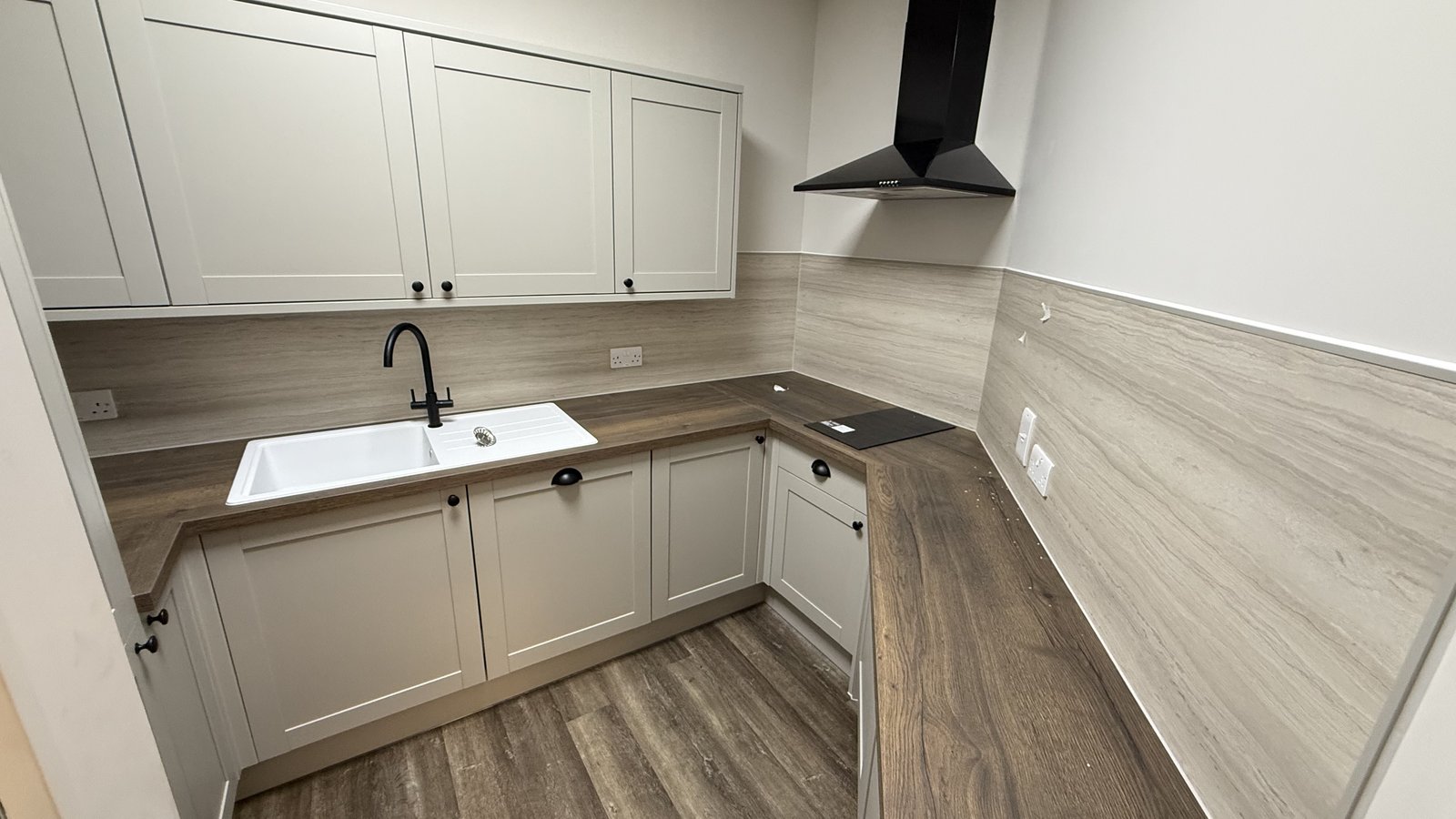
Why kitchen sealant fails faster than at home
A commercial kitchen is a hard place for any sealant. Joints see heat from cooking lines, steam, strong cleaning chemicals, hot-water washdowns and constant knocks from pans and trolleys. A typical failure is a mix of:
- The wrong product. A general-purpose silicone or decorator’s caulk won’t stand up to daily chemical cleaning and steam for long.
- Poor preparation. Sealant applied over grease, old sealant or damp surfaces loses grip and peels away.
- Too thin or too wide a bead. Joints need the right size and shape to move with stainless steel as it heats and cools.
- Age. Even good sealant wears out and needs replacing as part of normal maintenance.
Choosing the right sealant
For most kitchen joints the answer is a good-quality sanitary or hygienic grade silicone with mould resistance, matched to the surface. Where a client or designer has specified a food-safe or hygienic product, we follow that specification. We use and apply products from brands including Dow, Sika, Arbo and Tremco, and pick the product to suit the joint, the surfaces and the cleaning regime rather than using one tube for everything. Colour matters too: white or clear is usual, but grey or black can suit stainless steel and dark worktops.
If your kitchen has hygienic or clean-room standards to meet, have a look at our food-safe and clean-room sealant page.
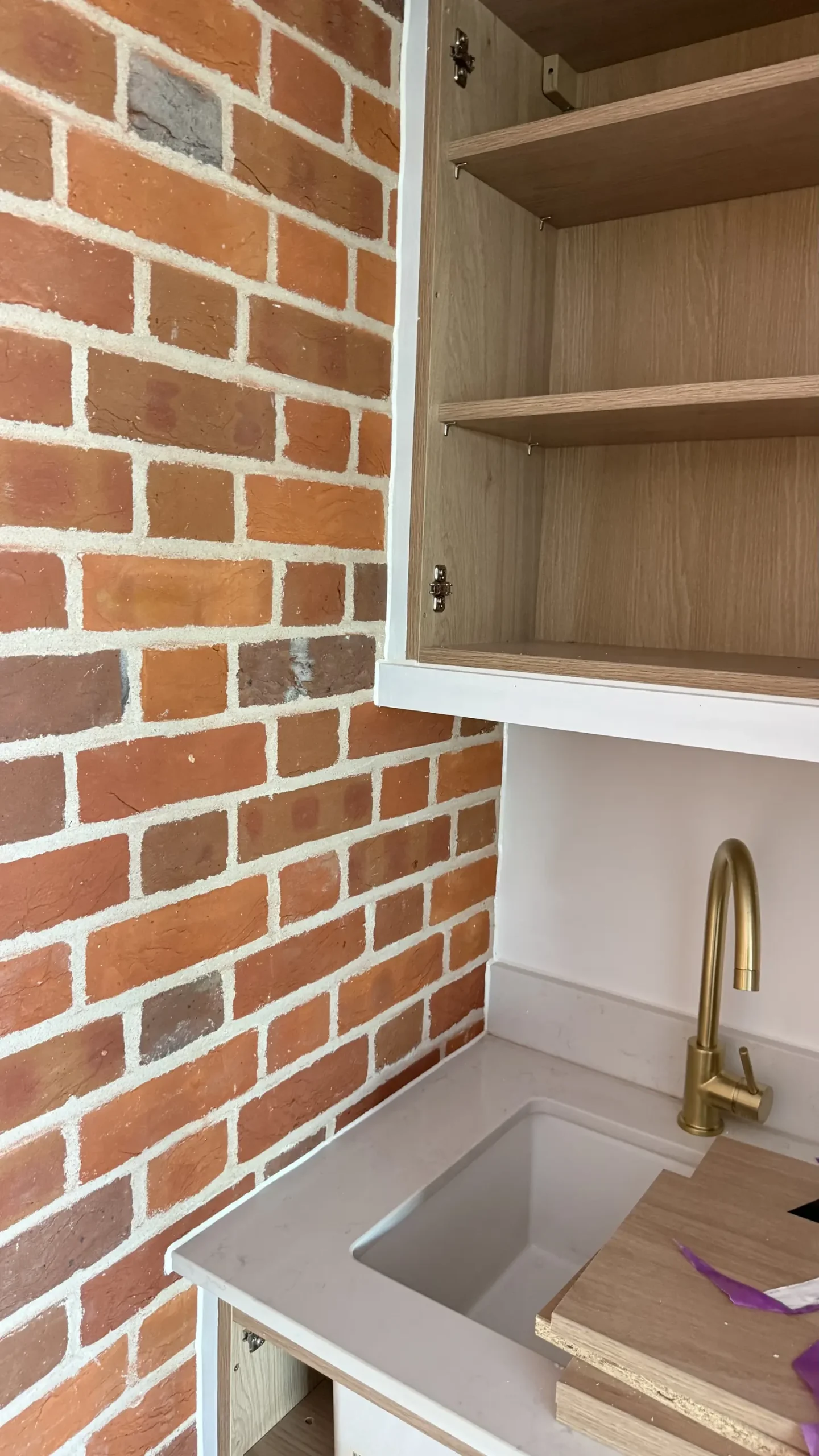
How we reseal a commercial kitchen
A good result is mostly preparation. On a typical job we:
- Walk the kitchen with you and agree which joints need replacing, so there’s no guesswork on the day.
- Cut out all the old sealant. New sealant over old won’t last, and it traps mould underneath.
- Clean and degrease the joint faces properly, then let them dry.
- Mask and prime where the surface and product call for it.
- Apply and tool a neat, consistent bead that sheds water and wipes clean.
- Leave it to cure before water, cleaning or heavy use. We’ll tell you exactly when the area can go back into service.
Working around service
Most kitchens can’t close for a day. We plan around you:
- Out-of-hours work early mornings, late evenings or on closed days.
- Zone by zone, so one section is done while the rest of the kitchen keeps running.
- Curing time built in, so joints are ready before the next service.
We’re Constructionline Silver members, carry £10m Employer’s Liability and £5m Public Liability insurance, our director holds a CSCS card as an NVQ Level 2 Sealant Applicator, and we provide RAMS on request. Main contractors and fit-out firms can find more on our commercial mastic contractor page.
FAQ
How often should commercial kitchen sealant be replaced?
There’s no fixed date. Replace it as soon as it’s split, peeling, coming away from one side or stained in a way cleaning won’t shift. Many kitchens build a check into their regular maintenance.
Can you just seal over the old silicone?
We don’t. Old sealant has to come out completely, or the new bead won’t bond and mould stays trapped underneath.
Can you work when we’re closed?
Yes. We regularly plan work outside normal hours so it doesn’t clash with service.
Do you cover London restaurants and cafés?
Yes. We cover London, Bedfordshire, Northamptonshire and within about 50 miles of Bedford, and travel further for larger commercial jobs.
Need your kitchen resealed?
Send us a few photos of the joints and a rough idea of the layout, and we’ll come back to you with a price. Call 01234 607 252, WhatsApp 07757 772 880, or use our contact page. For London kitchens, see our London mastic contractor page.
Mastic and sealant work in London: we cover every London borough. See Mastic Man London or go straight to your area: North London · North-East London · East London · South-East London · South-West London · West London · Westminster & the City.
Insured & pre-qualified
For homeowners, builders and main contractors.
- £10m Employer’s LiabilityInsurance cover
- £5m Public Liability & Professional IndemnityInsurance cover
- Constructionline Silver member

- NVQ Level 2Sealant Applicator
Over 20 years in construction
Products we use
Sealants and adhesives we use on site.








Brand names and logos are trademarks of their respective owners and are shown to identify products we use. No endorsement is implied.
Got a joint that needs doing properly?
Call us, or send a few photos on WhatsApp for the quickest quote.
- Opening hours
- Monday – Friday8:00am – 6:30pm
- Saturday9:00am – 4:00pm
- SundayClosed