

Ask any mastic applicator what’s behind most early joint failures on site and you’ll hear the same answer more often than not: it’s not the sealant, it’s what’s (or isn’t) behind it. Backer rod and sealant work as a pair. Get the backing wrong and even a top-quality polyurethane or silicone will tear, split or peel away within a few seasons.
We’re Pioneer Sealants Ltd, Bedford-based specialist sealant applicators with over 20 years in construction behind the company. A lot of our commercial work is movement joints on precast concrete, cladding, brickwork and slabs, so this is the stuff we check on every job before a cartridge comes out. Here’s a plain guide for site managers, contractors and anyone specifying joints.
What backer rod actually does
Backer rod is a round, flexible foam cord pushed into a joint before the sealant goes in. It does three jobs:
- Sets the depth. It stops the sealant being run too deep, which wastes product and, more importantly, makes a joint that can’t stretch properly.
- Gives you something to tool against. With a firm backing, the applicator can press the sealant onto both sides of the joint and form a good profile.
- Stops three-sided adhesion. Sealant won’t stick to the rod, so it only grips the two faces of the joint. That’s what lets it stretch and squeeze as the building moves.
The most common type is closed-cell polyethylene rod, which doesn’t soak up water and suits most external work.
Why joint depth matters so much
A sealant joint behaves a bit like an elastic band. A thin, well-shaped band stretches easily. A thick, square block of the same material doesn’t: it pulls hard at the edges and tears itself off the substrate.
That’s why the shape matters. When the sealant is tooled against a round rod, you get a slight hourglass profile: thicker where it bonds to the sides, thinner in the middle. The middle does the stretching, the edges hold on.
As a rough rule of thumb used across the trade, wider joints are often sealed at about twice as wide as they are deep, while narrow joints are sealed roughly as deep as they are wide, with a minimum depth so there’s enough material to grip. The exact figures change from product to product, so the manufacturer’s data sheet always has the final word, and BS 6213 (the British Standard guide to selecting construction sealants) is worth a read for anyone designing joints.

Three-sided adhesion: the hidden failure
If sealant is run into a joint with nothing behind it, it often bonds to the back of the joint as well as the two sides. Now it’s tied down on three faces. When the joint opens up in cold weather, the sealant can’t stretch evenly, so it splits down the middle or rips off one side.
You’ll often see this on joints that were “just filled” to look tidy. They look fine on handover, then crack after the first winter.
Bond breaker tape for shallow joints
Some joints are too shallow for backer rod, such as joints against a solid back or in some framing details. That’s where bond breaker tape comes in. It’s a thin tape laid in the bottom of the joint that the sealant won’t stick to, giving the same two-sided bond without the depth of a rod.
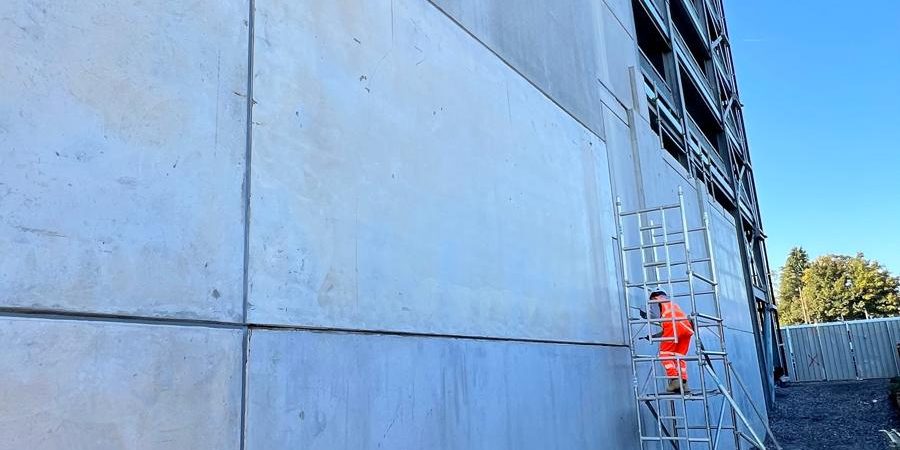
On larger precast jobs we’ve worked on, such as the wall panel joints at Guildford train station multi-storey car park, bond breaker tape was part of the joint build-up.
Getting the size right
Backer rod comes in a range of diameters, and backer rod sizes trip people up more than you’d think. The rod should be a bit wider than the gap so it stays put by compression and doesn’t sink or roll. Too small and it slides back into the joint, leaving the sealant too deep. Too big and it’s crushed, bulges out, or gets forced in so far it splits.
A few things we always check:
- Measure the joint, not the drawing. Precast panels and cladding are rarely all the same gap. A long run might need two or three rod sizes.
- Don’t puncture closed-cell rod. Pushing it in with a sharp tool can release gas that bubbles up through fresh sealant. A blunt roller or tool does the job.
- Keep the depth even. A rod that wanders in and out gives you thick and thin spots along the joint.
- Clean and dry first. Rod doesn’t fix a dirty joint. Dust, laitance and old sealant still need to come out, and primer goes on where the data sheet asks for it.
Where you’ll see it on site
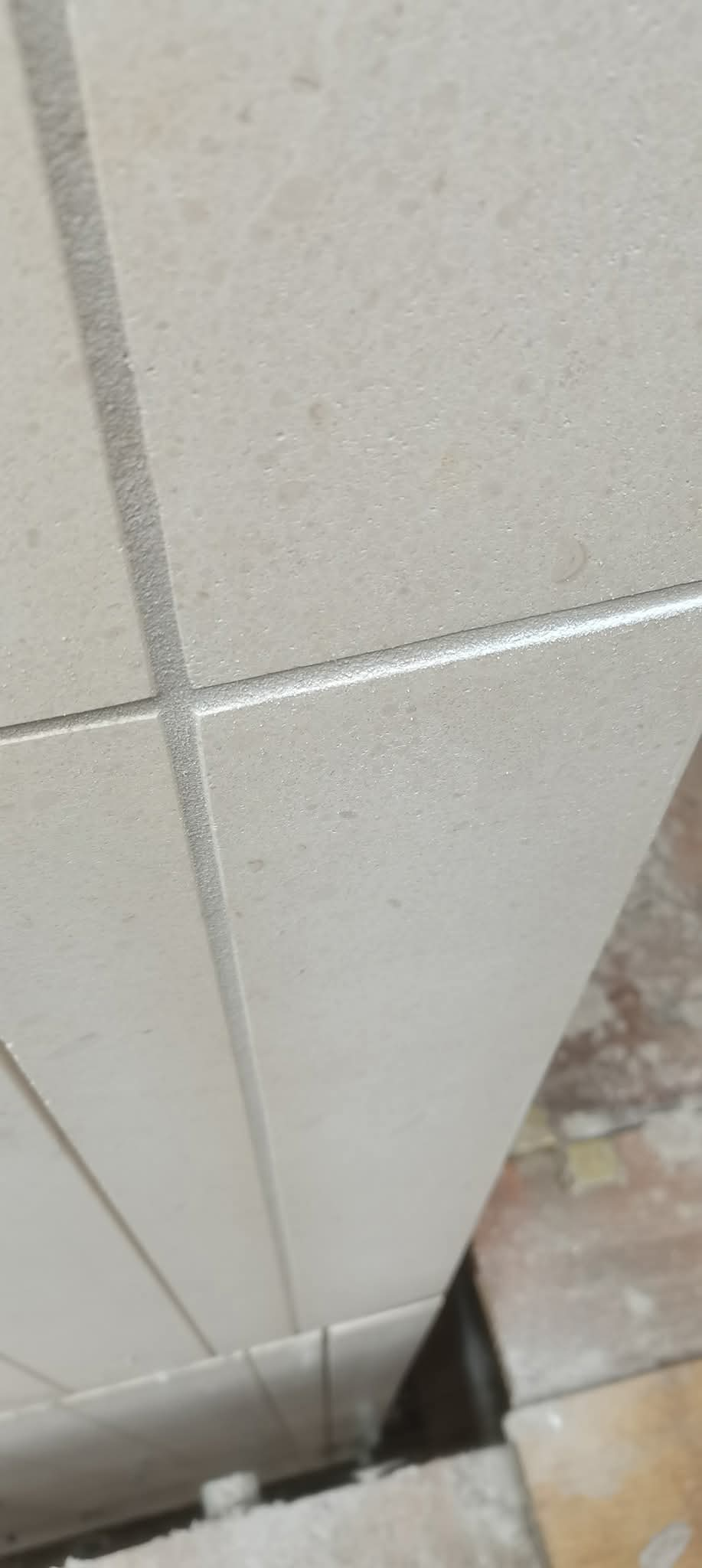
Backer rod and bond breaker tape turn up on most movement joints: expansion joints in slabs and walls, precast concrete panel joints, cladding and curtain walling, window and door perimeters on new builds, and car park decks (we covered those in our post on car park movement joints).
If you’re running a site and the mastic package is coming up, it’s worth asking your applicator how they’ll deal with joint depth before they start. A good one will be glad you asked.
FAQ
Do all sealant joints need backer rod?
No. Small internal joints, such as around a bath or worktop, usually don’t. Movement joints on the outside of a building, and any joint deep enough that the sealant would run in too far, normally do.
Can I use expanding foam instead of backer rod?
It’s not a good swap. Foam sets hard and uneven, sealant can bond to it, and you lose control of the depth.
What size backer rod do I need?
One a bit wider than the joint, so it’s held by compression. Measure the actual gaps and check the rod and sealant makers’ guidance.
What’s the right width-to-depth ratio for sealant?
It depends on the product and joint width. Many data sheets use around 2:1 for wider joints with a minimum depth, but always follow the sealant manufacturer.
Talk to us about your joints
We’re commercial mastic contractors working with main contractors, housebuilders and facilities teams across Bedfordshire, London and further afield for larger jobs. We hold Constructionline Silver, and RAMS are available on request.
Call 01234 607 252, WhatsApp 07757 772 880, or send us the drawings through our contact page and we’ll take a look.
Mastic and sealant work in London: we cover every London borough. See our mastic contractors in London page or go straight to your area: North London · North-East London · East London · South-East London · South-West London · West London · Westminster & the City.
Insured & pre-qualified
For homeowners, builders and main contractors.
- £10m Employer’s LiabilityInsurance cover
- £5m Public Liability & Professional IndemnityInsurance cover
- Constructionline Silver member

- NVQ Level 2Sealant Applicator
Over 20 years in construction
Products we use
Sealants and adhesives we use on site.








Brand names and logos are trademarks of their respective owners and are shown to identify products we use. No endorsement is implied.
Got a joint that needs doing properly?
Call us, or send a few photos on WhatsApp for the quickest quote.
- Opening hours
- Monday – Friday8:00am – 6:30pm
- Saturday9:00am – 4:00pm
- SundayClosed