

Getting old silicone out is the part of any reseal that nobody looks forward to. It’s fiddly, it takes longer than you think, and if you rush it you can scratch an acrylic bath or chip a tile edge. But it’s also the part that decides whether your new bead lasts years or starts peeling in a few months.
We’re Pioneer Sealants Ltd, Bedford-based specialist sealant applicators with over 20 years in construction behind the company. We strip out and reseal bathrooms, showers and kitchens every week across Bedfordshire, London and the surrounding counties. Here’s how we’d do it, and when it’s worth handing it over.
Why you can’t just seal over the old stuff
It’s tempting to run a fresh bead straight over tired silicone. Please don’t. New silicone won’t bond properly to old silicone, so it lifts away at the edges and water gets in behind. If the old bead has black mould in it, the mould is often in the sealant itself, not just on the surface, so it shows straight back through. Every reseal starts with taking the old sealant out completely.
What you’ll need
- A sharp utility knife or a silicone removal tool (a plastic scraper with angled edges)
- Plastic scrapers for acrylic baths and shower trays
- A silicone remover gel, or white spirit if the surface can take it
- Clean, lint-free cloths and a non-scratch scourer
- Rubber gloves, and ventilation if you’re using solvents
- Time. Allow a couple of hours for a bath and a bit longer for a shower with a screen
How to remove silicone sealant, step by step
- Cut along both edges. Run the knife along the top edge of the bead (against the tile) and the bottom edge (against the bath, tray or worktop). Keep the blade almost flat to the surface, not dug into it.
- Pull the bead out. Lift one end and peel it away slowly. Good old silicone often comes out in long strips. If it snaps, cut a fresh start and keep going.
- Scrape off what’s left. Use a plastic scraper or removal tool to take off the thin layer still stuck to the surfaces. Save metal blades for glazed tiles only, and keep them flat.
- Deal with the film. Silicone leaves an invisible greasy film behind, and fresh sealant won’t stick to it. Apply a silicone remover gel, leave it as long as the instructions say, then wipe and scrub it off with a non-scratch pad.
- Clean and treat any mould. If there’s black staining in the joint or the grout behind it, clean it with a mould remover, rinse well and let it dry.
- Let it dry fully. The joint must be completely dry before you reseal. After a bath or shower has been in use, that can mean leaving it for several hours or overnight.
Taking care with different surfaces
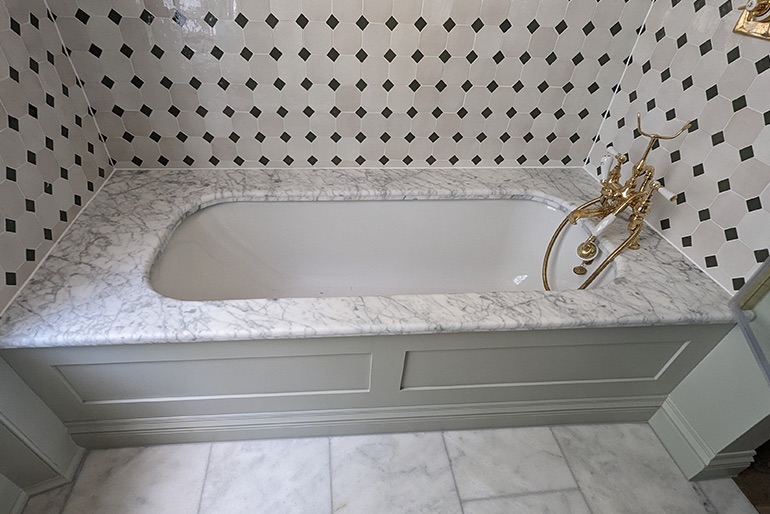
Acrylic baths and shower trays scratch easily, so stick to plastic tools and check that any remover gel is safe for acrylic before you use it.
Natural stone and marble can be marked by some solvents. Test any product on a hidden spot first, and don’t use white spirit on stone without checking.
Wooden worktops need care too. Lift the bead gently so you don’t gouge the timber, and never soak the edge.

Painted walls and plasterboard can come away with the silicone if you pull too hard, so cut the edge cleanly first.
Common mistakes
- Digging the knife in at an angle and scratching the bath or tray.
- Leaving a thin skin of old silicone behind and sealing over it.
- Skipping the remover and wondering why the new bead lifts.
- Resealing before the joint is properly dry, which traps moisture and helps mould come back.
- Resealing a bath while it’s empty. On a bath we fill it with water first, so it sits as low as it will in use, then seal. It’s covered in our guide on how to reseal a bath.
When to call a mastic man

Removing silicone yourself is perfectly doable on a small job. It’s worth calling a professional when:
- The old sealant has been put over the top of more old sealant, layer on layer.
- You’ve got an expensive surface, like marble, a stone worktop or a new acrylic bath, and don’t want to risk marks.
- There’s a frameless shower screen or a wet room floor involved.
- Water is already getting behind the joint, or the mould keeps coming back.
- It’s a whole house or a rental property with several bathrooms to turn round quickly.
Our bathroom resealing service covers the full job: stripping out, cleaning, treating and resealing with a quality anti-mould sealant in a matching colour. We also cover the capital through our London mastic and sealant service.
Silicone removal FAQ
What dissolves old silicone sealant?
Nothing truly dissolves cured silicone. Remover gels soften the thin leftover layer so you can wipe it off. The bulk of the bead always has to be cut and pulled out.
Can I use white spirit to remove silicone?
White spirit is fine for cleaning residue off glazed tiles and many hard surfaces. Check first on acrylic, stone and painted finishes.
How long after removing silicone can I reseal?
As soon as the joint is clean and completely dry. If you’ve washed it or used a remover, give it a few hours.
Will removing silicone get rid of black mould?
Removing the old bead takes out mould that has grown into the sealant. If the grout or wall behind is stained, clean that too, and improve ventilation so it doesn’t come back.
Get it done properly
If you’d rather skip the scraping, we’re happy to help. Call us on 01234 607 252, WhatsApp us on 07757 772 880 with a photo of the joint, or send us a message. We’re open Monday to Friday 8:00 to 18:30 and Saturday 9:00 to 16:00.
Insured & pre-qualified
For homeowners, builders and main contractors.
- £10m Employer’s LiabilityInsurance cover
- £5m Public Liability & Professional IndemnityInsurance cover
- Constructionline Silver member

- NVQ Level 2Sealant Applicator
Over 20 years in construction
Products we use
Sealants and adhesives we use on site.








Brand names and logos are trademarks of their respective owners and are shown to identify products we use. No endorsement is implied.
Got a joint that needs doing properly?
Call us, or send a few photos on WhatsApp for the quickest quote.
- Opening hours
- Monday – Friday8:00am – 6:30pm
- Saturday9:00am – 4:00pm
- SundayClosed