

Most people never look at the sealant round their windows until something goes wrong: a draught by the sofa, a damp patch on the reveal, or a black line that looks a bit grim from the garden. The bead of mastic between your uPVC frame and the brickwork or render is a small thing, but it’s what keeps wind and rain out of the gap round the frame.
Here’s how to tell when your uPVC window sealant needs replacing, why it fails, and what a proper reseal involves.
What the sealant round a uPVC window actually does
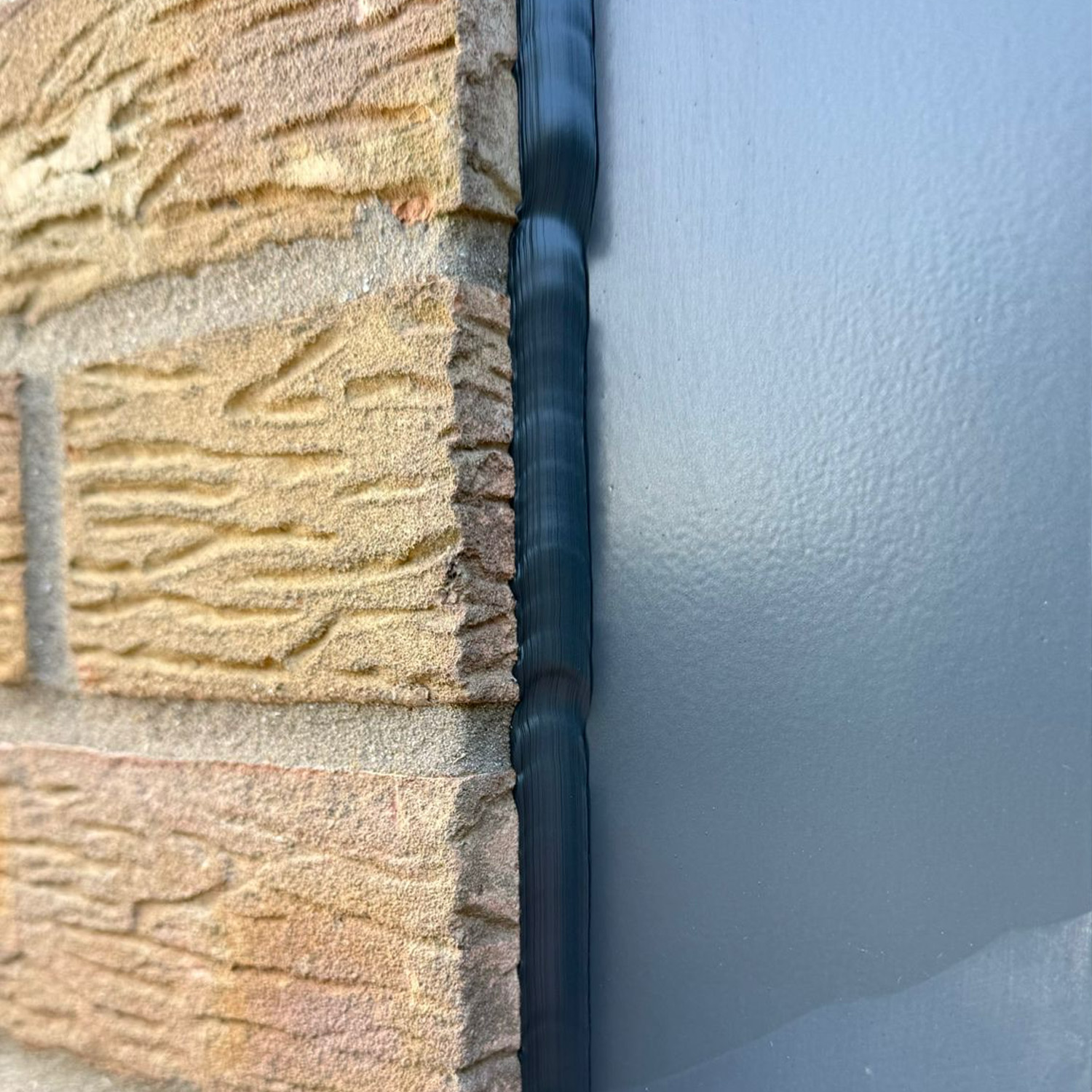
When a window is fitted, there’s always a gap between the frame and the opening. It’s packed and fixed, then finished with a bead of sealant on the outside (and usually on the inside too). That outside bead is the weather seal. It has to stick to two very different materials, plastic on one side and brick, stone or render on the other, and stay flexible while both of them move with the seasons.
One thing worth clearing up: when people search for “window seal repair” they often mean misted double glazing. That’s a failed seal inside the glass unit, and it’s a job for a glazier. Resealing windows, in our trade, means replacing the mastic round the outside of the frame.
Signs your window sealant needs replacing
Walk round the house and look closely at each frame. It’s time to reseal if you spot:
- Cracks or splits along the bead, or a bead that’s gone hard and brittle.
- Gaps where it’s pulled away from the frame or the brickwork. Press it gently: if it lifts, it’s no longer sealing.
- Shrunken, sunken or patchy sealant, often where an old cement-type mastic or a cheap filler was used.
- Black mould or heavy staining, more common on shady sides of the house.
- Draughts or whistling round the frame on windy days.
- Damp patches, bubbling paint or mould on the inside reveal, especially after driving rain.
If you’re seeing damp inside, get it looked at soon. Water getting in round a frame can soak the reveal and the plaster for months before it’s obvious.
Why window mastic fails

uPVC window sealant doesn’t last forever, and some beads fail far sooner than they should. The usual reasons are:
- Sun and weather. UV light and years of rain and frost slowly harden most sealants, and south-facing windows usually go first.
- Movement. uPVC expands and contracts with temperature more than brick does, so the joint is always stretching and squeezing. A sealant that can’t cope with that movement will crack or tear away.
- The wrong product. Decorator’s caulk and general-purpose acrylic are fine for painted skirting indoors, but they aren’t made for an outside joint on a moving plastic frame.
- Poor preparation. Sealant put on over dust, old mastic, damp brick or flaking paint won’t bond properly, however neat it looks on day one.
- A bead that’s too thin. A skim of sealant across the surface hasn’t got the body to take movement. It needs to fill the joint properly.
How we reseal uPVC windows
A proper window reseal is mostly preparation. On every job we:
- Cut out all the old sealant, every last bit, without scratching the frame.
- Clean the frame and the brickwork or render, removing dust, old residue and anything loose.
- Check the gap. Deep or wide joints get a foam backing rod first, so the sealant is the right depth and can stretch the way it’s meant to.
- Prime where needed, as porous brick and some render surfaces bond better with a primer.
- Apply a low-modulus exterior sealant made for windows and moving joints, in one continuous bead. We use and apply products from brands such as Arbo and Sika.
- Tool it to a neat, slightly concave finish, so rain runs off rather than sitting on the joint.

We match the colour to your frames and walls: white, anthracite grey, black, brown, cream and others. Our window and door mastic service covers frames, doors and patio doors, and if the bottom joint is the problem, see our page on window sill sealant.
One practical point on timing: most sealant cartridges say not to apply in rain, on wet surfaces or in near-freezing weather. If the forecast turns, we’d rather move the job a day than seal a wet joint.
DIY or professional?
A single ground-floor window is a fair DIY job if you’re patient and use a proper exterior sealant, not caulk. Where it’s worth calling a mastic man is a whole house of windows, anything above ground floor, rendered walls where a slip with a blade shows, or frames where damp is already getting in.
We’re based in Bedford and cover Bedford and the surrounding towns, as well as London, the South East, the Midlands and East Anglia. If you’re looking for a mastic man in London or a mastic man near me, we’re a specialist sealant company with over 20 years in construction behind us and £5m public liability insurance.
uPVC window sealant FAQ
How do I know if it’s the sealant or the double glazing that’s failed?
If the glass is misty or wet between the panes, it’s the sealed glass unit, which is a glazier’s job. If the problem is draughts, damp on the reveal or cracked mastic round the frame, it’s the sealant.
Can you put new sealant over the old?
No. New sealant won’t bond properly to old, and it traps dirt and mould underneath. The old bead has to come out completely.
Can you reseal windows in winter?
Yes, as long as the joint is dry and the temperature is within what the sealant maker allows. We plan around the weather and won’t seal a wet frame.
Should the inside of the window be sealed too?
Usually, yes. The outside bead keeps the weather out, and the inside finish stops draughts and gives a tidy edge to the plaster or decorating.
Get your windows resealed
Send us a couple of photos of your frames and we’ll tell you what they need. Call 01234 607 252 or WhatsApp 07757 772 880, or message us through our contact page. We’re open Monday to Friday 8:00 to 18:30 and Saturday 9:00 to 16:00.
Insured & pre-qualified
Peace of mind for homeowners, builders and main contractors.
- £10m Employer’s LiabilityInsurance cover
- £5m Public Liability & Professional IndemnityInsurance cover
- Constructionline Silver member

- CSCS Skilled WorkerSealant Applicator (NVQ Level 2)
Over 20 years in construction
Products we use
Professional-grade sealants and adhesives from leading manufacturers.








Brand names and logos are trademarks of their respective owners and are shown to identify products we use. No endorsement is implied.
Got a joint that needs doing properly?
Call us, or send a few photos on WhatsApp for the quickest quote.
- Opening hours
- Monday – Friday8:00am – 6:30pm
- Saturday9:00am – 4:00pm
- SundayClosed