
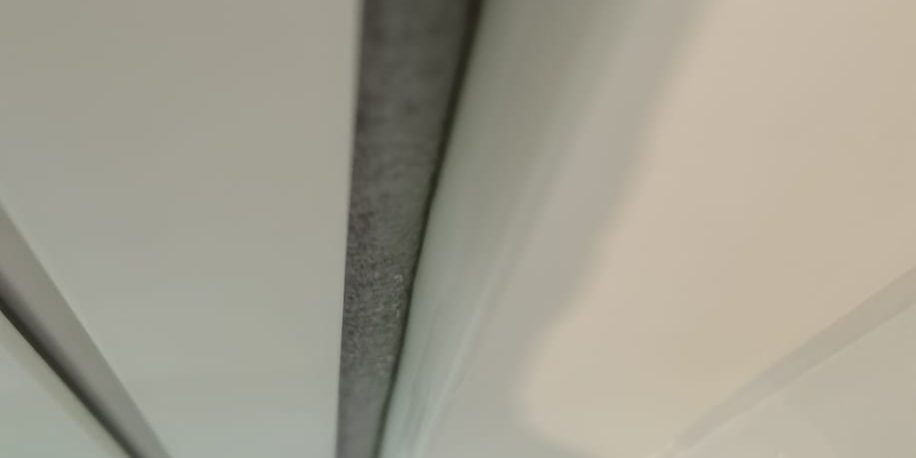
Fire-rated sealant looks like any other bead of mastic once it’s in. That’s exactly why it causes so many problems on site. The wrong cartridge, the wrong backing or a joint that’s wider than the product was tested for can all leave a joint that looks finished but won’t do its job in a fire.
We’re Pioneer Sealants Ltd, Bedford-based specialist sealant applicators with over 20 years in construction behind the company. We apply fire-rated sealant where it’s specified, as part of our commercial mastic work for main contractors and developers across London, the South East, the Midlands and East Anglia. This guide covers what fire-rated sealant is, how to read the ratings, and what to check before anyone starts gunning.
What is fire-rated sealant?
Fire-rated sealant (often called fire-rated mastic) is a sealant that has been fire tested as part of a joint. In a fire, it’s there to help stop flames, hot gases and smoke passing through the gap for a set length of time.
You’ll mostly come across three types:
- Intumescent acrylic. Swells when it gets hot and fills the gap. Common on internal joints in plasterboard, blockwork and concrete, and it can usually be painted.
- Fire-rated silicone. Stays flexible, so it suits joints that move and areas that see moisture, such as perimeter joints around glazing or joints near wet areas.
- Fire-rated hybrid or polyurethane. Used on some movement joints and where good adhesion to mixed materials is needed.
Which one is right comes down to the specification, the substrates, how much the joint moves and whether it needs painting over afterwards.
How to read a fire rating
Most fire-rated sealants sold in the UK quote a classification such as EI 60 or E 120. In plain terms:
- E stands for integrity: how long the joint stops flames and hot gases getting through.
- I stands for insulation: how long it stops the far side getting too hot.
- The number is the time in minutes.
The important part is that the rating only applies to the joint that was tested. The manufacturer’s test evidence will set out the joint width and depth, the wall or floor it was in, the backing material, and whether the sealant went on one side or both. If your joint is wider, shallower or backed with something different, the rating on the cartridge doesn’t automatically carry over.
Five things to check before fire-rated sealant goes in
- Is it actually specified? Check the drawings, the fire strategy and the specification. Don’t swap a fire-rated product for a standard one, or the other way round, without the designer agreeing.
- Does the joint match the test evidence? Measure widths and depths on site, not just on the drawing. Joints wider than the tested range need a different product or detail.
- Is the right backing in? Some fire-rated systems are tested with mineral wool behind the sealant, others with a particular backer rod. Standard polyethylene backer rod isn’t a safe assumption.
- One side or both? Many ratings depend on sealing both faces of a wall. If only one side is accessible, raise it before work starts.
- Is the substrate ready? Clean, dry, sound surfaces and primer where the manufacturer asks for it. Fire-rated sealant still needs to bond properly to work.
Fire-rated sealant is not the same as fire-stopping
This is the one that catches people out. Fire-rated sealant on a linear joint, such as a head-of-wall joint, a perimeter joint or a movement joint, is one thing. Fire-stopping around pipes, cables, ducts and other service penetrations through compartment walls and floors is a separate, specialist package with its own systems and paperwork, and it’s usually given to a third-party certified installer.
We don’t carry out fire-stopping. Where a specification calls for fire-rated sealant on joints, we apply it to the manufacturer’s instructions and the specified joint detail, and we’ll tell you straight away if something on site doesn’t match. Keeping the two packages separate on your programme makes inspection and sign-off a lot simpler.
Records and sign-off
Fire-rated joints get checked, so it pays to keep the paperwork tidy as you go. On our jobs that means noting the product used and where, taking photos of the backing and the finished joints before they’re covered up, and flagging any joint that doesn’t match the detail. RAMS are available on request before we start.
The same care applies to the joints around them. If the building also has structural movement joints to seal, those need a sealant chosen for the movement, and sometimes a fire-rated one too.
Working on commercial sites
We work to the site’s RAMS, permits and inductions. We’re CSCS carded and IPAF and PASMA trained for work at height. We hold Constructionline Silver and carry £10m employer’s liability and £5m public liability insurance. We use and apply products from brands such as Arbo, Sika, Dow (DOWSIL), Tremco CPG and Bostik, matched to the specification, and we’ve worked for main contractors including Kier, Vistry and SCL London. If you’re running a job in the capital, see our page for main contractors in London.
Fire-rated sealant FAQ
Is fire-rated silicone the same as fire-stopping? No. Fire-rated silicone and other fire-rated sealants seal joints. Fire-stopping deals with service penetrations and is a separate specialist package.
Can I use any backer rod with fire-rated sealant? Not necessarily. Use the backing material the manufacturer’s test evidence shows. Some systems need mineral wool.
Can intumescent sealant be painted? Many intumescent acrylics can be painted once cured, but check the product data sheet first.
Do you cover London? Yes, regularly, along with the South East, the Midlands and East Anglia.
Need fire-rated joints sealed?
Send us the specification or drawings, a few photos and the site location, and we’ll come back to you with a clear quote. Call 01234 607 252, WhatsApp 07757 772 880, email office@pioneersealants.co.uk or use our contact page. We’re open Monday to Friday 8:00 to 18:30 and Saturday 9:00 to 16:00.
Insured & pre-qualified
Peace of mind for homeowners, builders and main contractors.
- £10m Employer’s LiabilityInsurance cover
- £5m Public Liability & Professional IndemnityInsurance cover
- Constructionline Silver member

- CSCS Skilled WorkerSealant Applicator (NVQ Level 2)
Over 20 years in construction
Products we use
Professional-grade sealants and adhesives from leading manufacturers.






Brand names and logos are trademarks of their respective owners and are shown to identify products we use. No endorsement is implied.
Got a joint that needs doing properly?
Call us, or send a few photos on WhatsApp for the quickest quote.
- Opening hours
- Monday – Friday8:00am – 6:30pm
- Saturday9:00am – 4:00pm
- SundayClosed